





Blog
Gold Testing Methods Explained: Fire Assay, XRF, and Acid Tests

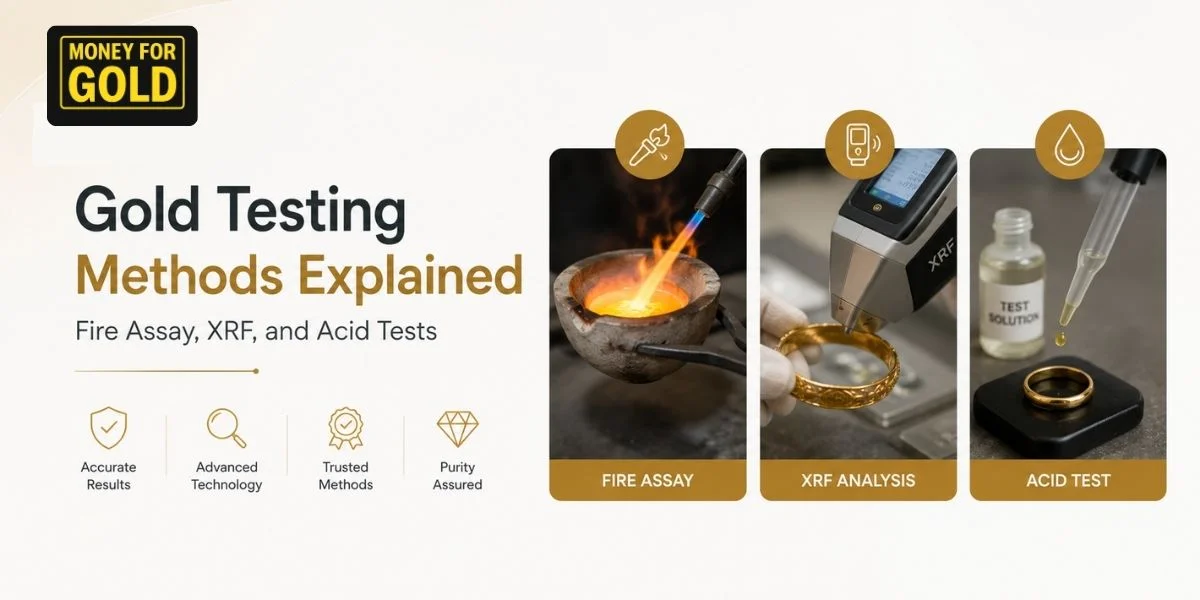
Gold has fascinated people for centuries. It represents wealth, security, tradition, and sometimes that one family necklace everyone fights over during weddings. But when it comes to buying, selling, or valuing gold, one important question matters most: Is the gold real and pure?
That is where professional gold testing methods become essential. Whether you plan to sell old jewelry, invest in bullion, or verify inherited ornaments, understanding gold testing methods explained properly can help you avoid fraud and get accurate value for your precious metal.
Professional buyers and jewellers use scientific methods to determine gold purity, karat value, and authenticity. If you are planning to sell jewelry to a Trusted Gold Buyer in Gurgaon, like Money For Gold, knowing how these testing methods work can help you make informed decisions and build confidence during the process.
In this guide, we will explain the three most common gold testing techniques: Fire Assay, X-ray fluorescence (XRF), and Acid Tests, along with their accuracy, advantages, limitations, and practical use in the real world.
Why Gold Testing Matters
Gold jewelry may look genuine on the outside, but appearance alone does not confirm purity. Many pieces contain mixed metals, gold plating, or varying karat compositions. Without proper testing, buyers and sellers risk inaccurate pricing.
Gold testing helps determine:
- Gold purity
- Karat value
- Authenticity
- Presence of mixed metals
- Market value
According to the World Gold Council, hallmarking and purity verification remain critical for maintaining transparency and consumer trust in the gold industry.
Today, professional gold analysis combines traditional expertise with scientific technology to ensure reliable results.
Understanding Gold Purity and Karat
Before discussing testing methods, it helps to understand how gold purity works.
Pure gold is measured as 24 karat (24K), which contains nearly 99.9% gold. However, pure gold is soft, so jewellers often mix it with other metals for strength and durability.
Common karat values include:
- 24K – Pure gold
- 22K – 91.6% gold
- 18K – 75% gold
- 14K – 58.5% gold
Lower karat jewelry contains more alloy metals such as copper, silver, or zinc.
Professional testing methods help jewellers determine the exact karat value accurately instead of relying on visual inspection.
Fire Assay: The Most Accurate Gold Testing Method
When people ask, “What is the most accurate gold testing method?” the answer is usually Fire Assay.
What Is Fire Assay?
Fire Assay is one of the oldest and most trusted scientific methods used for gold analysis. Laboratories and refineries worldwide use it to measure gold purity with extremely high accuracy.
The method dates back thousands of years and remains the industry standard for bullion testing.
According to Britannica, Fire Assay separates precious metals from impurities through high-temperature heating and chemical processes.
How Does Fire Assay Work for Gold Testing?
The process involves several precise steps:
- Technicians collect a small gold sample.
- They mix the sample with special chemicals called fluxes.
- The mixture heats inside a furnace at extremely high temperatures.
- Base metals oxidise and separate.
- Precious metals remain after purification.
- Experts calculate the exact gold content.
This process provides highly accurate results for gold purity analysis.
Advantages of Fire Assay
Extremely Accurate: Fire Assay offers exceptional precision and remains the benchmark for precious metal testing.
Reliable for Bullion Testing: Refineries and professional labs trust this method for testing bullion and investment-grade gold.
Industry Standard: Many regulatory authorities and laboratories recognize Fire Assay as the gold standard for purity verification.
Limitations of Fire Assay
Despite its accuracy, Fire Assay has some drawbacks.
- It destroys a small portion of the sample
- The process takes longer
- Specialized laboratory equipment is required
- Costs are higher compared to quick retail tests
Because of these limitations, jewellers often combine Fire Assay with faster testing technologies like XRF.
XRF Testing: Fast and Non-Destructive Gold Analysis
Modern gold buyers increasingly use X-ray fluorescence (XRF) technology because it provides quick and non-destructive testing.
If you visit a Trusted Gold Buyer, like Money For Gold, there is a strong chance they use XRF machines for instant gold evaluation.
What Is XRF Gold Testing?
XRF stands for X-ray fluorescence, a scientific testing method that analyzes metal composition using X-rays.
The machine scans the jewelry surface and identifies the percentage of gold and other metals present.
Unlike Fire Assay, XRF testing does not damage the jewelry.
According to Olympus IMS, XRF analyzers provide fast and reliable elemental analysis for precious metal testing.
XRF Gold Testing Accuracy Explained
Many people search for “XRF gold testing accuracy explained” because they want reliable results before selling gold.
XRF technology delivers highly accurate readings for:
- Gold purity
- Karat analysis
- Alloy composition
- Metal contamination
Most professional machines provide results within seconds.
However, XRF mainly analyzes surface composition. Deep internal impurities may sometimes remain undetected if jewelry contains thick plating or layered metals.
Still, for daily retail use, XRF remains one of the best methods to verify gold authenticity quickly and safely.
Advantages of XRF Testing
Non-Destructive Testing: The jewelry remains completely intact.
Instant Results: Results appear within seconds.
Safe and Convenient: The process does not involve chemicals or physical damage.
Ideal for Retail Gold Buyers: Shops offering Cash for Gold in Gurugram often use XRF machines because they provide transparency and speed during evaluation.
Limitations of XRF Testing
- Machines are expensive
- Surface-only analysis may miss deep layers
- Accuracy depends on machine calibration
Professional buyers often combine XRF with other testing methods for complete verification.
Acid Test: Traditional Gold Testing Method
Before advanced machines became common, jewellers relied heavily on Acid Tests.
Even today, many small jewelry shops still use this method because it is affordable and practical.
What Is the Acid Testing Process for Gold Jewelry?
The Acid Test uses nitric acid and testing stones to determine approximate gold purity.
Here is how the process works:
- The jeweler rubs the gold item against a black testing stone.
- The rubbing leaves a visible metal streak.
- Different acid solutions are applied to the streak.
- The reaction helps estimate karat value.
Different acid strengths correspond to different gold purities.
This method helps jewellers quickly check if gold is real or fake.
Advantages of Acid Testing
Affordable: Acid testing costs much less than advanced laboratory equipment.
Quick Basic Verification: jewellers can estimate purity within minutes.
Widely Used: Small jewelry stores frequently use this method for initial testing.
Limitations of Acid Testing
Acid testing has lower precision compared to Fire Assay or XRF.
Other drawbacks include:
- Minor surface scratching
- Chemical handling risks
- Limited accuracy
- Dependence on operator experience
Because of these limitations, many professional buyers now prefer XRF technology for customer-facing transactions.
Hallmarking and Gold Authentication
Hallmarking adds another layer of authenticity to gold jewelry.
A hallmark certifies:
- Gold purity
- Manufacturer identity
- Certification standards
In India, the Bureau of Indian Standards (BIS) regulates gold hallmarking to protect consumers from fraud.
However, hallmarking alone should not replace professional testing. Fake hallmarks occasionally appear in counterfeit jewelry markets.
Professional verification remains important before major transactions.
How Jewellers Determine Gold Karat Value
Professional jewellers combine multiple methods to determine gold karat value accurately.
Depending on the situation, they may use:
- Visual inspection
- Hallmark verification
- Magnet testing
- Acid tests
- XRF spectrometry
- Fire Assay
Scientific methods used for gold analysis provide far more reliable results than simple home tricks found online.
Because honestly, if biting gold worked perfectly, dentists would probably become investment advisors.
Which Gold Testing Method Is Best?
The answer depends on your purpose.
| Method | Accuracy | Speed | Damage | Best Use |
| Fire Assay | Very High | Slow | Slightly destructive | Laboratory analysis |
| XRF Testing | High | Very Fast | Non-destructive | Retail testing |
| Acid Test | Moderate | Fast | Minor scratching | Basic verification |
If you want the highest precision, Fire Assay remains the best option.
If you want quick and non-destructive testing, XRF offers an excellent balance between speed and accuracy.
How to Check if Gold Is Real or Fake
While professional testing remains the safest option, some basic signs may indicate fake gold.
Watch for:
- Discoloration
- Magnetic attraction
- Missing hallmark
- Unusual weight
- Skin discolouration after wearing
Still, home methods cannot replace professional precious metal testing.
If you plan to sell jewelry or bullion, consult a Trusted Gold Buyer in Gurgaon who uses scientific testing equipment for transparent evaluation.
Why Professional Gold Testing Builds Trust
Transparency matters greatly in gold transactions.
Professional testing methods help:
- Prevent fraud
- Ensure fair pricing
- Protect buyers and sellers
- Verify authenticity
- Increase customer confidence
Businesses offering Cash for Gold in Gurugram build stronger trust when they explain testing procedures openly and use certified technology.
Customers appreciate honesty, especially when emotions and family jewelry become part of the transaction.
Final Thoughts: Understanding Gold Testing Helps You Make Smarter Decisions
Understanding gold testing methods explained gives you a clearer picture of how professionals verify gold purity and authenticity. Whether you choose Fire Assay for maximum precision, XRF for fast non-destructive analysis, or Acid Tests for quick evaluation, each method plays an important role in the gold industry.
Today, modern buyers and jewellers rely heavily on scientific methods used for gold analysis because accurate testing protects both customers and businesses. If you plan to sell old jewelry, bullion, or inherited ornaments, always work with a Trusted Gold Buyer in Gurgaon who follows transparent testing practices and uses professional equipment.
Reliable gold testing is not just about checking purity. It is about trust, fair value, and confidence in every transaction.
For professional gold evaluation, transparent testing, and fair pricing, get in touch with Money For Gold today. Our experts ensure accurate purity checks using advanced testing methods so you always receive the true value of your gold.
