




Blog
Silver Hallmarks Explained: How to Identify the Purity of Your Silver Items

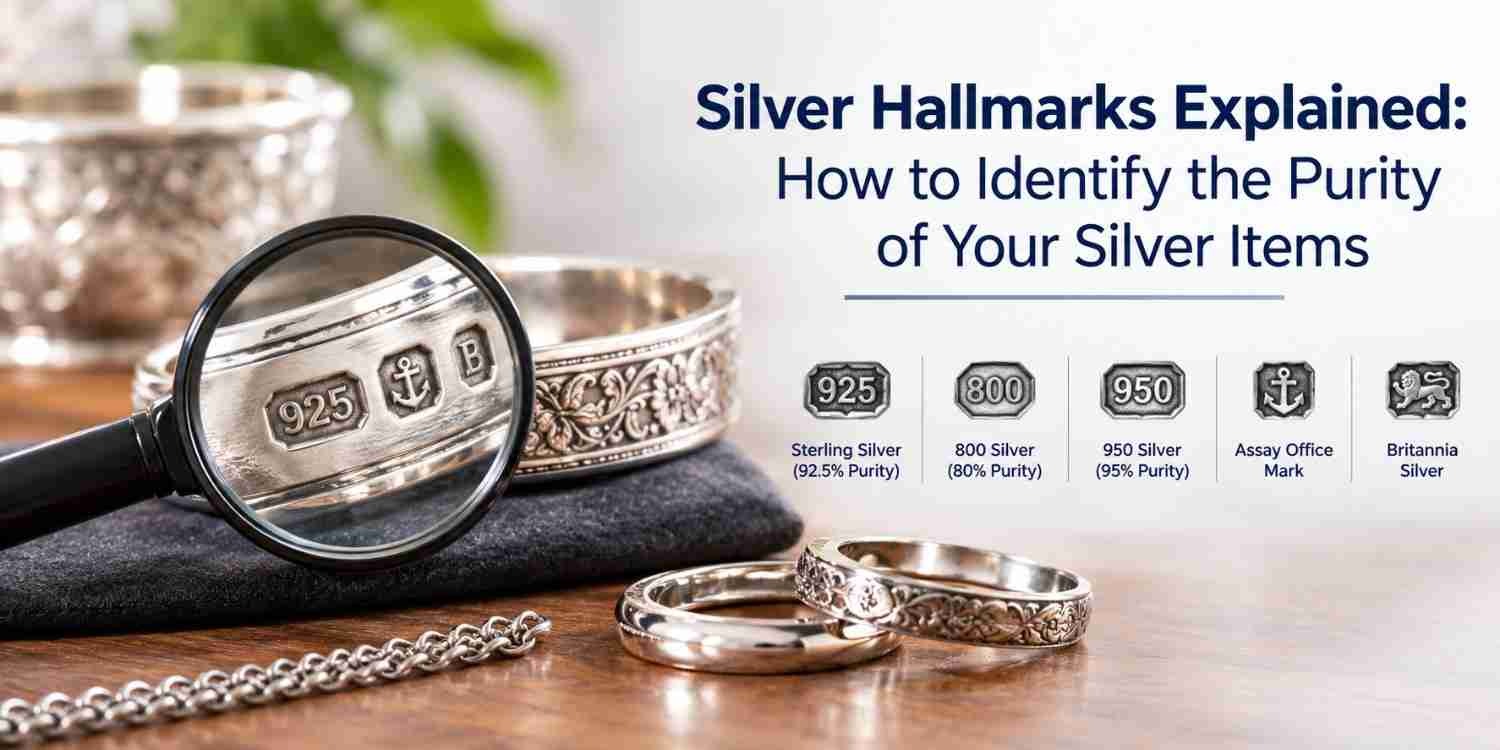
Buying or selling silver can be confusing, especially when a silver buyer does not know what the small numbers or symbols stamped on silver actually mean. A ring may have 925 engraved inside the silver, while an old coin or utensil might carry a different marking. I have seen this confusing times, and understanding silver hallmarks can give a silver buyer a useful first clue about silver purity and identity.
For people considering a sale, knowing these markings can also help them ask the right questions before approaching a professional buyer. If you are looking for a Silver Buyer in Gurgaon, learning how to read these marks can make the evaluation process easier and more transparent. Money For Gold helps customers understand the factors that can influence the assessment of precious-metal items.
What Are Silver Hallmarks?
A silver hallmark is a mark put on an object. This mark provides details about the silver's purity, who made it or where it came from. The way hallmarking works can change from one country to another. It can also be different based on how old the item is.
It is useful to understand that not every mark serves the same purpose:
- Purity mark: Indicates the stated silver fineness, such as 925 or 999.
- Maker's mark: Can identify the manufacturer, craftsman, or company.
- Assay or certification mark: May indicate that an item was examined under a particular hallmarking system.
You may find these marks in different places, including the inside of rings, the back of jewellery, clasps, the underside of utensils, or on certain silver objects.
Understanding Silver Purity Marks
The number stamped on silver generally refers to its fineness—the amount of silver in the alloy.
Mark | Silver Purity | Common Meaning |
800 | 80% | Silver alloy |
925 | 92.50% | Sterling silver |
950 | 95% | High-purity silver |
999 | 99.90% | Fine silver
|
These silver purity marks can be useful. You should not automatically assume that a marking proves authenticity. Silver purity marks can wear away. Sometimes can be placed incorrectly.
Common Silver Hallmark Symbols and Their Meanings
Different numbers and words can appear on silver items. Understanding the most common ones makes silver identification much easier.
925 Silver Hallmark
A 925 silver hallmark generally indicates that the item contains 92.5% silver, with the remaining portion made up of other metals. This composition is commonly associated with sterling silver because the added metals can make the material more practical for jewellery and everyday objects.
If you see “925” on a ring, chain, bracelet, or another item, it tells you the stated fineness. However, the complete marking and the item itself should still be considered when authenticity matters.
999 Silver Hallmark
A 999 silver hallmark indicates a stated fineness of 999 parts per thousand, or approximately 99.9% silver. This is commonly referred to as fine silver.
Because it has very little alloying material, fine silver is generally softer than sterling silver. This makes it particularly relevant for certain types of silver products rather than every type of jewellery.
Sterling Silver Hallmark
The term “Sterling” is commonly associated with silver containing 92.5% silver. This is why you may see 925 and sterling silver used in connection with one another.
Still, hallmark systems and terminology can vary depending on the item's origin and period, so it is better to consider the complete set of markings rather than relying on a single word.
Also Read: Gold Loan vs Selling Gold: Which Is Better for You in 2026?
How to Identify Silver Using Hallmarks
If you have an old piece of jewellery, utensil, coin, or another silver item, follow these simple steps:
- Find the hallmark
Look carefully at the underside, inside surface, clasp, or less visible areas. - Check the number or symbol
Look for markings such as 800, 925, 950, or 999. - Identify the stated purity
Understand what the number represents before making assumptions about the item's value. - Look for additional marks
A maker's mark or other identifying symbol can provide useful information. - Verify when necessary
If the mark is unclear, damaged or questionable professional testing can give you certainty. Good lighting and a magnifying glass can help when you look at silver identification marks.
Good lighting and a magnifying glass can help when examining small silver identification marks.
Silver Hallmarks vs Silver-Plated Markings
One of the most common mistakes is assuming that anything marked or described as silver is made entirely from silver.
Feature | Silver Item | Silver-Plated Item |
Silver content | Contains substantial silver | Usually has a thin silver layer over another metal |
Markings | May include a purity mark | May have plating-related markings |
Value basis | Can depend partly on silver content | Usually not valued in the same way for silver content |
Testing | May be professionally tested | Testing can help identify the underlying material
|
This distinction is important when assessing older utensils, decorative pieces, jewellery, or inherited items. Money For Gold recommends understanding what you actually own before making assumptions about its worth.
Can a Hallmark Prove That Silver Is Genuine?
A hallmark is a valuable starting point, but it is not necessarily the final word.
A silver purity stamp can indicate the stated composition of an item, but the physical mark itself may not establish authenticity in every situation. The condition of the item, additional markings, weight, construction, and appropriate testing can all provide useful information.
For example, someone may find “925” on an item and immediately assume it is genuine sterling silver. A more careful approach is to treat the marking as one piece of evidence and have the item professionally assessed when accuracy is important.
Money For Gold can help customers understand why purity, weight, and the type of silver item matter during an evaluation.
What Does Silver Purity Mean for Its Value?
Purity is one factor that can influence the potential value of a silver item, but it is not the only one.
Other considerations can include:
- Weight
- Silver purity
- Current silver market conditions
- Type of item
- Condition
- Craftsmanship
- Age or rarity
- Potential collector interest
For example, two silver items with the same weight may contain different amounts of silver if their purity levels differ.
If you are also researching metals more broadly, Sell Gold in Gurgaon can be a very helpful starting point for learning how to sell gold items.
Final Thoughts
Knowing silver hallmarks gives you a first step when you look at silver jewellery, silver coins, silver utensils and other silver items. Marks, like 925 and 999 can tell you about the stated silver purity while maker and certification marks may give you silver clues.
However, a hallmark should not be viewed in isolation when authenticity or value is important. Money For Gold believes that informed sellers are better positioned to understand how their items are assessed.
If you have received a silver item or are just interested in a mark, on your jewelry take a minute to look for the hallmark. Knowing what the hallmark means can help you make a choice.
If you need a clearer understanding of your silver or other precious-metal items, you can also consult a local silver buyer in Gurgaon for professional guidance. Before selling, it is always worth knowing what you have and understanding the factors that may influence its value.

About Money For Gold Team
Money For Gold Team is the in-house research and editorial team at Money For Gold, creating informative content on gold selling, purity testing, gold valuation, pricing, and market trends. Our team researches and reviews relevant information to provide clear, practical, and trustworthy insights for customers across Delhi NCR, Noida, and Gurgaon.
View all posts by Money For Gold Team