
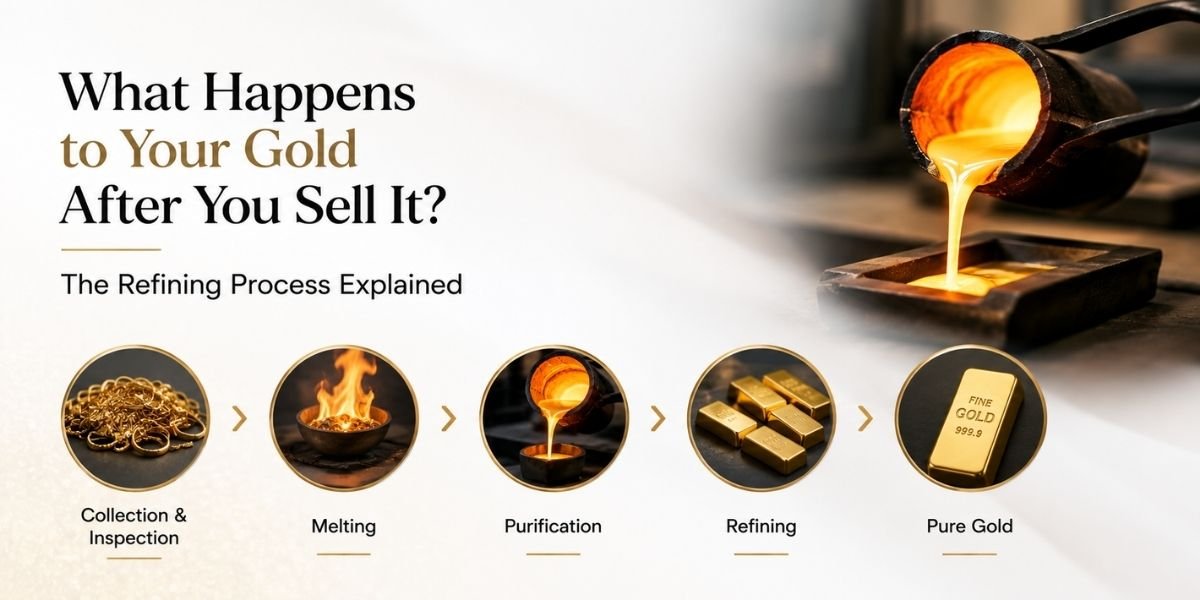
Gold rarely sits still for long. One day, it’s an old bracelet hiding in your drawer. The next day, it enters a global recycling and refining network worth billions. Many people sell unwanted jewelry without knowing what actually happens afterward. Does the gold get melted? Reused? Exported? Turned into bullion? The short answer: yes, often all of the above.
If you have ever searched for what happens to gold after selling, you are not alone. More people now want financial clarity before they choose a secure transaction. Whether someone visits a local jeweler, a refinery partner, or a trusted Money for Gold service for Cash for Gold in Gurgaon, understanding the process helps build market confidence and trust.
Gold has a unique advantage over many assets. It does not lose its core value when recycled. According to the World Gold Council, recycled gold forms a significant part of the global gold supply chain because gold can be melted, purified, and reused repeatedly without damaging its quality. That makes gold recycling both economically valuable and environmentally practical.
In this guide, we will explain the gold resale process step by step, from valuation to refining, using verified industry sources and real market practices.
Also Read: Gold Testing Methods Explained: Fire Assay, XRF, and Acid Tests
Why People Sell Gold in the First Place
People sell gold for different reasons. Some need quick liquidity during emergencies. Others want to exchange outdated jewelry for modern designs. Many simply want to convert idle assets into usable cash.
Gold offers strong financial flexibility because it works as a liquid asset in almost every economy. This gold liquidity process gives consumers a practical way to unlock value without selling long-term investments like property or stocks.
In India, the second hand gold market continues to grow because households often hold unused jewelry for years. Instead of letting those items gather dust, sellers use the gold exchange process to achieve value realization and financial security.
That is why searches like Where to Sell Gold in Gurgaon have increased steadily in recent years. Consumers now compare pricing transparency, purity testing methods, and reputation before making a smart selling choice. Trusted buyers like Money for Gold also help customers understand the complete gold buying and selling process before any transaction begins.
Step 1: Gold Evaluation and Purity Testing
The process begins with gold valuation after sale preparation. Before any buyer offers money, they test the metal carefully.
Professional buyers usually examine:
- Weight
- Purity
- Hallmark
- Current market price
- Stone deductions if jewelry contains gems
This stage matters because not all gold contains the same purity level. A 24K gold coin contains more pure gold than a 14K chain mixed with alloy metals.
Hallmark Verification Matters
Trusted buyers perform gold hallmark verification to confirm purity claims. In India, hallmarking standards help consumers identify authentic jewelry grades.
The Bureau of Indian Standards (BIS) strengthened hallmarking regulations to improve transparency in the gold buying and selling process. This move increased consumer trust and reduced confusion in the gold resale market.
Professional services like Money for Gold usually explain testing procedures clearly because transparent pricing builds long-term trust with customers.
Gold Assay and Testing Methods
Most professional buyers use methods like:
- XRF machine testing
- Acid testing
- Density checks
- Electronic gold assay systems
These tests support transparent pricing and informed decision making. Reputable buyers explain every step clearly because trust building matters in the precious metals industry.
And yes, watching your jewelry go through a machine can feel dramatic. It almost looks like airport security for necklaces.
Step 2: Price Determination and Offer
Once testing ends, the buyer calculates the final offer.
Gold price determination usually depends on:
- Live gold market rates
- Purity percentage
- Weight after deductions
- Refining cost margins
- Market demand
This part of the gold asset conversion process often surprises first-time sellers. Jewelry craftsmanship rarely affects resale value significantly because refiners mainly focus on the recoverable gold content.
For example, a heavily designed necklace may cost a fortune in a showroom due to labor charges. After resale, the gold recovery process only values the actual precious metal weight.
That is why responsible sellers compare offers from multiple buyers before completing a sell gold for cash process. Established names like Money for Gold generally provide live market-linked rates, which improves financial clarity for customers.
Step 3: Sorting and Scrap Gold Processing
After purchase, buyers sort the collected material.
The scrap gold processing stage separates items into categories such as:
- Jewelry scrap
- Broken ornaments
- Coins
- Industrial gold waste
- Dental gold
- Bullion products
According to the London Bullion Market Association (LBMA), recycled gold includes post-consumer products, old jewelry, investment bars, and manufacturing scrap returned for refining and reuse.
Large buyers and refineries process huge quantities of recycled material daily. In fact, the World Gold Council states that old jewelry scrap represents a major source of recycled gold in India.
Businesses involved in Cash for Gold in Gurgaon transactions often work directly with refiners or refinery partners to streamline this gold trade cycle efficiently.
This stage also helps businesses prepare materials for gold melting and purification.
Step 4: The Gold Melting Process Begins
Now comes the dramatic part everyone imagines.
The collected scrap enters high-temperature furnaces during the gold melting process. Gold melts at approximately 1,064°C. Refiners heat the material carefully until it turns into liquid metal.
The gold melting point process separates impurities from valuable precious metals. However, melting alone does not create pure gold. Mixed metals still remain inside the molten material.
Think of it like making chai. Boiling water starts the process, but the real flavor comes later.
Professional gold refineries process these materials using strict quality controls because even small purity differences affect market value.
Step 5: Refining and Purification
This stage answers the main question behind what happens to gold after selling.
After melting, refiners begin gold refining after selling through chemical and electrolytic purification methods.
The goal is simple: isolate pure gold from all other metals.
Also Read: Understanding the Difference Between 22K and 24K Gold Before You Sell
Common Refining Techniques
Refineries may use:
- Electrolysis
- Aqua regia chemical treatment
- Miller process
- Wohlwill process
These systems help achieve very high purity levels suitable for bullion, jewelry manufacturing, or investment products.
According to the LBMA Responsible Gold Guidance, refiners must follow strict due diligence, sourcing, and compliance standards to maintain credibility in the international gold trade cycle.
That is important because responsible sourcing now plays a major role in the gold recycling industry.
Step 6: Recycled Gold Re-Enters the Market
After purification, the refined gold moves back into the gold market supply chain.
This recycled gold may become:
- New jewelry
- Gold bullion bars
- Coins
- Electronics components
- Investment products
That means your old ring could eventually return as a wedding band, a smartphone component, or even part of central bank gold reserves.
The recycled gold jewelry process supports sustainability because refiners can reuse existing metal instead of relying only on new mining operations.
The World Gold Council and LBMA both emphasize responsible sourcing and supply chain transparency across the precious metals industry.
This continuous gold recycling process also supports commodity market stability and long-term value preservation.
Why Trust Matters in the Gold Buying Process
Selling gold involves more than simple monetary conversion. It also involves trust, transparency, and financial security.
When searching for where to Sell Gold in Gurgaon, customers should choose businesses that offer:
- Transparent valuation
- Hallmark verification
- Secure transaction methods
- Professional documentation
- Market-linked pricing
- Proper customer support
Many consumers now prefer businesses like Money for Gold because they combine professional gold valuation with customer education. Several trusted Cash for Gold in Gurgaon providers also maintain verified Google Business profiles, allowing customers to check reviews, ratings, and location details before visiting.
That extra transparency improves confidence during safe asset liquidation and helps customers make informed financial decisions.
How Gold Recycling Supports the Economy
Gold recycling creates more than just financial returns.
It supports:
- Resource conservation
- Wealth management
- Economic stability
- Market liquidity
- Financial growth opportunity
- Financial independence
The gold recycling process also reduces dependence on newly mined resources. Since gold retains value over time, recycled metal remains highly useful across industries.
This is one reason many experts consider gold one of the most efficient forms of asset recovery and wealth optimization.
Even the global goldsmithing industry depends heavily on recycled gold supply because refiners continuously feed purified metal back into manufacturing systems.
Final Thoughts: The Journey of Gold After Selling
Gold never truly disappears from the economy. It simply changes form.
After selling, your jewelry enters a sophisticated gold refining process involving testing, valuation, melting, purification, and redistribution into global markets. The same metal may circulate repeatedly through the gold trade cycle for decades.
Understanding what happens to gold after selling gives consumers more confidence and investment awareness. It also helps people recognize the importance of responsible recycling, transparent pricing, and trusted exchange processes.
Whether you plan to liquidate unused ornaments or simply want financial growth opportunities, knowing how the gold recovery process works can help you make smarter decisions.
And honestly, there is something fascinating about it. Your old chain may stop being jewelry tomorrow, but the gold itself keeps working long after the fashion trend disappears.If you are planning to sell your gold or want to understand its true value before making a decision, contact us today for trusted guidance and transparent valuation support. Our team can help you with safe exchange processes, fair pricing, and complete clarity throughout your gold selling journey.